For technology enthusiasts and homeowners alike, smart home devices offer far more than voice-activated party tricks or automated mood lighting. When deployed strategically, connected sensors, programmable thermostats, and energy monitors act as silent watchdogs that lower monthly utility bills and prevent expensive structural damage. You do not need an expensive whole-home automation overhaul or proprietary luxury hubs to see meaningful savings on property expenses. Starting with a few targeted, affordable devices delivers rapid payback while making any house or apartment safer and easier to manage.
The key to budget-friendly home technology lies in choosing open, interoperable standards and focusing on systems that consume the most energy or carry the highest repair risks. Heating, cooling, water heating, and plumbing leaks account for the vast majority of preventable household expenses, making them the smartest starting points for practical automation.
Slashing Heating and Cooling Bills With Smart Thermostats
Heating and air conditioning typically account for the largest slice of any residential energy bill, yet traditional manual thermostats frequently waste money conditioning empty rooms. Installing a Wi-Fi-enabled smart thermostat allows you to build tailored heating and cooling schedules around your actual daily routine, automatically dialing back energy usage while everyone is at work or asleep. Geofencing features take efficiency even further by using your smartphone’s location to shift the system into eco mode when the last person leaves the house and pre-conditioning rooms shortly before your return.
Many modern smart thermostats also track runtime analytics and local weather forecasts, offering plain-language suggestions to optimize cycle times without sacrificing comfort. Pairing a main thermostat with inexpensive wireless room sensors helps balance temperatures in bedrooms or home offices that run warmer or cooler than the hallway where the thermostat is mounted. Readers may also want to visit web-bulletin.com.
Check with your local electric or gas utility provider before buying, as many utilities offer instant rebates or deeply discounted smart thermostats to encourage peak-load energy reduction. Combining automated temperature setbacks with basic weatherstripping around doors and windows multiplies your monthly utility savings right away.
Preventing Catastrophic Water Damage With Leak Sensors
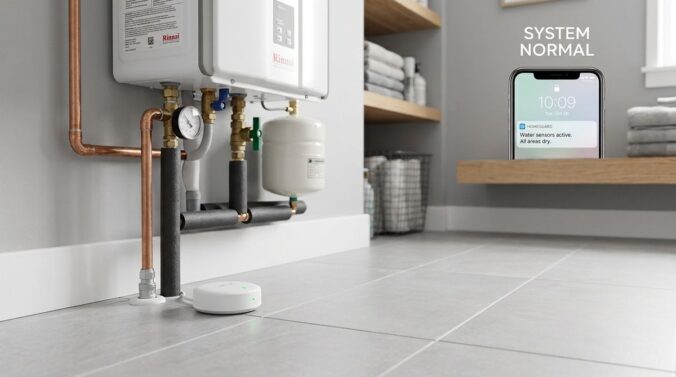
A slow drip under a kitchen sink or a burst washing machine hose can cause tens of thousands of dollars in flooring, drywall, and mold remediation damage within hours. Compact wireless water leak sensors cost very little, run for years on standard coin-cell batteries, and send immediate alerts to your phone the moment moisture touches their contacts. Placing sensors beneath water heaters, under bathroom vanities, behind refrigerators with ice makers, and beside washing machines provides round-the-clock protection for pennies a day.
For even stronger protection, budget-conscious property owners can add a smart motorized valve controller that clamps directly onto an existing main water shutoff lever without requiring a plumber to cut pipes. When linked to your leak sensors through a simple automation rule, the valve automatically closes the main water line the second a leak is detected, stopping flooding even while you are away on vacation. You can also visit mazapoint.net for more reading.
- Place battery-powered leak sensors under every sink, water heater, washing machine, and dishwasher.
- Use smart plugs with energy-monitoring chips to identify and shut off phantom power drains overnight.
- Set automated schedules for exterior porch lights and hallway lamps using inexpensive smart bulbs or switches.
- Verify that chosen devices support local control so essential automations work without paid cloud subscriptions.
Eliminating Phantom Loads and Improving Lighting Efficiency
Dozens of household electronics—from gaming consoles and desktop monitors to entertainment centers and coffee makers—continue drawing standby electricity even when switched off. Smart plugs equipped with built-in power monitoring let you measure exact wattage draw in real time, revealing which appliances quietly inflate your monthly electric bill. Programming smart plugs to cut power completely to entertainment centers or home office workstations overnight eliminates phantom loads effortlessly.
Upgrading high-traffic light fixtures with smart LED bulbs or dimmable smart switches combines ultra-low wattage consumption with automatic scheduling. Programming outdoor security lights to turn on at sunset and dim automatically after midnight improves home safety while using minimal electricity. Using motion sensors in closets, laundry rooms, and basements ensures lights never stay burning in empty spaces for hours on end.
Avoiding Subscription Traps With Local-First Ecosystems
One of the biggest hidden costs in consumer smart home gear is monthly cloud storage fees for cameras, doorbells, and analytics platforms. Selecting devices that support local microSD card storage, network-attached storage, or open local smart home platforms keeps your ongoing monthly costs at zero. Building around open standards also protects you from proprietary apps shutting down or locking basic features behind paywalls years after purchase.
Taking an incremental approach—adding two or three high-impact sensors each quarter—keeps upfront hardware spending modest while letting you test reliability in your specific home layout. For a related read on this site, see How to Create a Safer Routine for Using.
Building a Smarter, More Economical Home
Practical smart home technology pays for itself when every gadget solves a real financial or maintenance problem. By automating climate control, placing leak sensors in high-risk plumbing zones, eliminating standby power waste, and choosing subscription-free local devices, homeowners protect their property while lowering monthly operating costs. Thoughtful automation turns everyday tech curiosity into tangible household savings.