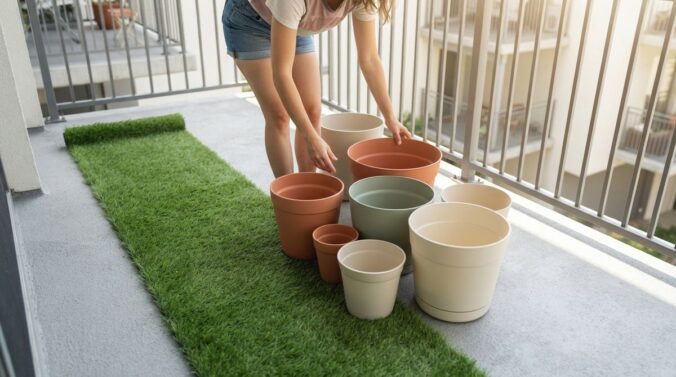
A garden can become another source of work when a busy mother has to remember every watering, feeding, and weather change. Plants do not coordinate their needs with school runs, household tasks, or demanding workdays. Missed care can lead to frustration, while constant checking turns a relaxing space into a maintenance queue. Thoughtful technology can reduce that mental load without making the garden feel mechanical.
The best approach begins with simple changes that require little money, installation, or technical support. More involved equipment should enter only when it solves a recurring problem that basic reminders cannot handle. This gradual method also gives Mom time to decide which features genuinely suit her habits. The aim is not a fully automated yard, but a dependable garden that remains pleasant to use.
Free Fixes in the Phone Already in Her Pocket
The quickest improvement is a clear care schedule stored on a device she already carries. Calendar reminders can cover watering checks, seedling inspections, pruning, and seasonal cleanup without creating a separate system to manage. Each reminder should describe an action rather than issue a vague alert, such as checking the soil near the roots instead of simply watering. Notes about plant location are also useful when several containers or beds have different needs.
A simple photo album can become a visual garden log with almost no setup. Regular pictures reveal changes in leaf color, growth direction, and crowding that may be hard to notice from day to day. Readers may also want to visit Mama hustler. The final schedule should still reflect local conditions and direct observation rather than treating a general recommendation as a rigid command.
Small Sensors That Replace Routine Guesswork
The next level of effort involves basic sensors for soil moisture, temperature, or light. These devices are most valuable in places where conditions vary sharply, such as a sunny window box beside a shaded bed. A sensor should answer a specific question that repeatedly interrupts Mom’s day, not collect data merely because it can. If she already knows that a particular planter dries quickly, another notification may add noise instead of useful information.
Placement matters more than a crowded feature list. A moisture probe positioned too close to a drip outlet can report damp soil while nearby roots remain dry, and a light sensor under leaves may misrepresent the exposure around the whole plant. You can also visit Bebegogo.com for more reading. It is also wise to choose equipment with readable displays or straightforward alerts, especially when Mom does not want to open an application every time she steps outside.
Simple Watering Controls for Busy Weeks
Automated watering becomes worthwhile when missed sessions are a recurring issue rather than an occasional inconvenience. A basic timer connected to a hose or irrigation line can handle predictable routines while leaving Mom free to adjust for rain, heat, and new plantings. The system should begin with conservative run times and be observed closely until the soil receives even coverage. Automation works best as a reliable assistant, not as permission to stop looking at the garden.
Technology readers may enjoy detailed scheduling options, but a small number of understandable settings usually creates a better household tool. For a related read on this site, see Developing a Conscious Digital Footprint for Long-term Growth. Manual controls should remain easy to reach so Mom can water new seedlings or skip a cycle without navigating several screens. Any connected controller should also retain a useful basic schedule if the home network becomes unavailable.
A Shared Garden Dashboard for the Household
Once reminders, sensors, and watering controls are working, their information can be gathered into a simple shared view. A household dashboard might show which beds need attention, when watering last occurred, and whether a task has already been completed. This prevents repeated work when several family members help with the same garden. It also allows Mom to ask for assistance without explaining every plant’s routine from the beginning.
Shared access requires restraint because garden management should not become a stream of constant alerts. Notifications can be reserved for events that require action, while ordinary readings remain available for anyone who wants to inspect them. Access settings should give Mom control over who can change schedules and who can only view information. A brief household note beside each garden zone can preserve practical knowledge that sensor data cannot capture, such as where water pools or which pot is sheltered from rain.
Larger Upgrades That Deserve Careful Planning
More ambitious improvements include permanent irrigation lines, weather-responsive controls, powered greenhouse vents, and outdoor network coverage. These projects cost more effort because they involve placement, weather protection, maintenance, and compatibility between components. Before buying equipment, the household should identify the exact burden it will remove and consider how the garden may change. A fixed system designed around temporary containers can become awkward when Mom rearranges the space.
Reliability is especially important outdoors, where heat, moisture, dust, and weak signals can expose fragile designs. Controls should have clear manual overrides, and essential watering should not depend entirely on a remote service or complicated account. Data collection also deserves attention, since a garden controller rarely needs broad access to household information. The strongest upgrade is one that Mom can understand, operate, and recover when a battery fails or a connection drops.
Technology That Stays in the Background
A well-designed garden system gives Mom fewer details to remember while preserving the satisfaction of caring for living plants. Start with reminders, add sensing only where uncertainty persists, and automate only the routines that have proved burdensome. When the technology stays quiet, dependable, and easy to override, the garden can return to being a place of growth rather than another demanding device.