Los Angeles, CA — In an era when children’s digital lives are shaped by hyper-competitive games, infinite feeds, and attention-extractive design, a different approach is taking form. It’s called SODOG, and its creators believe it can help kids understand, express, and manage emotions — through play.
Positioned as an emotional play universe for ages 6–10, SODOG isn’t a single game. It’s a connected ecosystem designed to serve a demographic that frequently falls between preschool IP and teen platforms.
The Big Idea: Play With Purpose
SODOG centers on a simple premise: emotions can be explored and practiced interactively.
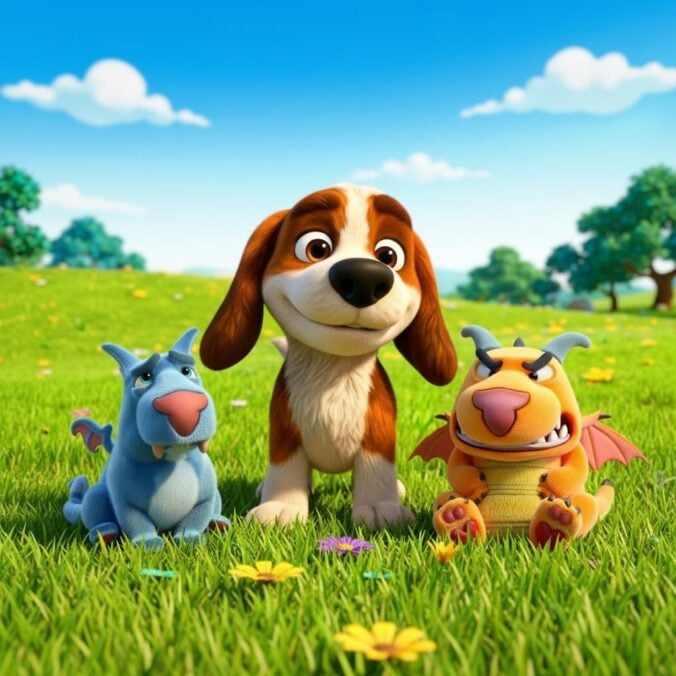
Children begin in a safe, visually rich hub village where they care for SoDog, a loyal companion that mirrors a child’s choices and mood. From this hub, players enter themed portals to emotion-specific worlds such as Joy, Calm, Anger, Fear, Trust, and Compassion. Each world features a dragon guide who translates abstract feelings into concrete, age-appropriate challenges.
-
Volcano of Anger: rhythm-based play to cool molten lava — a playful on-ramp to healthy release and regulation.
-
Forest of Calm: focus puzzles paced by breathing prompts — echoing mindfulness techniques kids already meet in schools.
-
Cave of Shadows: gentle navigation in low light with SoDog’s reassuring voice — practicing courage and self-soothing.
“We wanted a space where kids don’t just play to win,” says Nataliya Melikhov, Co-Founder and President. “They play to grow. Every quest helps them understand themselves and connect with others.”
A “Disneyland of Emotions” — Minus the Adrenaline
SODOG’s progression is built around collectible emotional artifacts earned in each world. Children display them back home in the hub; combinations unlock hidden meta-portals, encouraging replay without grindy loops.
This flips familiar game incentives:
-
Empathy and courage replace weapons and power-ups.
-
Emotional milestones drive growth, not only points or ranks.
-
Cooperation and care substitute for zero-sum competition.
The structure reflects a growing consensus in education and product design: well-crafted play is a powerful vehicle for social-emotional learning — particularly in the formative 6–10 window.
Beyond the Screen: A Tangible Bridge
Ambition extends into the physical world. SODOG pairs the game with collectible toys, mystery eggs, and books:
-
Hatch a dragon figure from a physical egg and scan a QR code.
-
Meet that same dragon in-game, with new quests and dialogue.
-
Reinforce lessons at bedtime with a storybook built around the day’s play.
“We want emotional growth to feel tangible,” says Verlin Moore, Co-Founder and CEO. “When a child holds a dragon that stands for courage or compassion, it becomes a real reminder of what they achieved.”
What’s Under the Hood: SEL-Informed Design
SODOG aligns activities with widely used Social-Emotional Learning (SEL) competencies:
-
Self-awareness: noticing feelings through character interactions.
-
Self-management: using breathing or rhythm to regain calm.
-
Social awareness: practicing empathy in cooperative missions.
-
Relationship skills: solving shared puzzles with siblings or friends.
-
Responsible decision-making: choices with gentle, meaningful consequences.
For families, a parent dashboard aims to surface conversation starters and patterns — supporting real-world dialogue rather than replacing it.
Safety, Privacy, and Monetization Ethics
Designing for kids demands more than clever mechanics. The team emphasizes:
-
Privacy by design and planned compliance with COPPA and international child-privacy rules.
-
Kid-appropriate UX: no dark patterns, clear pacing, and time-respectful loops.
-
Family-friendly monetization: a subscription-first model with optional cosmetic customization; no pay-to-win.
These commitments will be scrutinized as SODOG scales, but they’re table stakes for trust with parents, schools, and clinicians.
Why Now: The Market Context
Middle childhood remains underserved: preschoolers have structured shows and apps; teens thrive on open UGC platforms. Families, educators, and therapists increasingly seek safe, meaningful digital experiences that complementclassroom SEL rather than compete with it.
SODOG positions itself between edtech and entertainment — a hybrid that could resonate with both direct-to-family adoption and institutional partnerships. The company plans staged content releases, adding new emotion worlds over time to maintain novelty without overwhelming first-time players.
Roadmap: From Game to Immersive Events
The roadmap includes VR modules (2026+) for movement-based co-play — breathing to calm a volcano, or offering a comforting gesture to a sad dragon — and global live events (2027+) that connect kids in shared, pro-social challenges.
Sustaining that pipeline will require disciplined content production, careful user research, and ongoing safeguards. But if SODOG can maintain its balance of joy, safety, and measurable skill-building, it could meaningfully broaden what “kids’ games” can be.
The Bottom Line
SODOG isn’t trying to out-compete popular platforms on speed or spectacle. It’s proposing a different metric of success: play that leaves children more emotionally capable than when they started.
As SoDog — the puppy guide — wags his tail at the hub’s edge, the invitation is simple: come play, and grow.