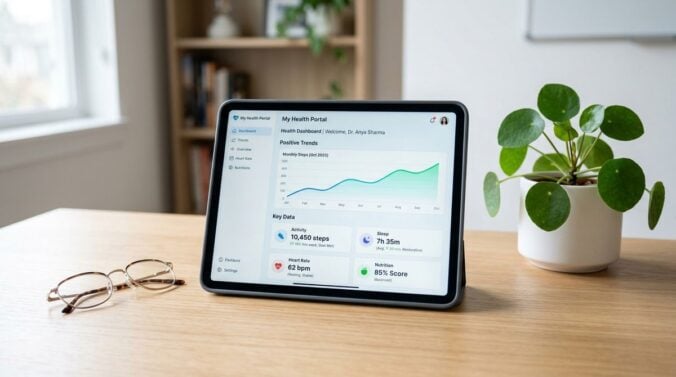
Modern consumer technology makes tracking personal wellness simpler than ever. Smartwatches monitor resting heart rates, sleep stages, and physical activity. Smart scales, digital thermometers, and blood pressure monitors send continuous metrics to mobile applications. Meanwhile, healthcare networks encourage patients to access clinical visit summaries, laboratory panels, and imaging reports through separate online portals.
While gathering this personal health data is relatively straightforward, keeping it organized presents a persistent challenge. Many individuals find critical records scattered across disconnected web portals, vendor dashboards, and email attachments. When a new health concern arises or a routine checkup approaches, locating an older lab result or tracking a physiological pattern often turns into a frustrating search.
Taking control of personal health information requires a deliberate archiving workflow. By establishing an organized central repository, curating device exports, and formatting details for medical consultations, you can transform fragmented files into an orderly health archive. This practice allows you to maintain continuous ownership of your medical history regardless of changes in insurance plans, healthcare providers, or hardware platforms.
The Reality of Health Portal and Sensor Fragmentation
Healthcare providers often operate on separate software networks. A primary care clinic might use one online platform, while an urgent care center, a dental clinic, and an outpatient laboratory use different proprietary systems. Each platform requires unique login credentials, formats documents differently, and limits online record availability. Depending entirely on provider portals leaves you vulnerable to account lockouts, technical migrations, or lost access when changing insurance plans.
Consumer tracking hardware introduces an additional layer of complexity. Smart rings, fitness wristbands, and mobile wellness applications generate constant time-series data. However, these consumer tools are typically designed to display daily badges and weekly trends rather than export interoperable medical files. When exploring the expanding ecosystem of digital health sensors and wellness science, resources like 40tbfacts.com offer helpful context on how modern wellness tools and clinical technologies interact with daily human physiology.
Understanding what your devices measure helps you decide what data is worth preserving. You do not need to save every minute-by-minute step count or sleep disturbance score. Instead, the primary objective is to capture broader baseline patterns, notable anomalies, and clinically verified documents so that you hold an independent personal record under your direct control.
Establishing a Structured Local Directory
The foundation of effective data management is a simple, predictable directory structure. Rather than relying on cloud portal search bars, create a dedicated master folder on an encrypted local storage drive. Dividing your health archive into intuitive categories prevents clutter and ensures you can retrieve files during urgent situations without sorting through unrelated documents.
A practical folder layout separates historical records by care category. Establishing dedicated subdirectories within your main health repository keeps documents organized logically:
- Clinical Visits: Consultation notes, hospital discharge instructions, and treatment summaries organized by physician specialty.
- Diagnostics and Labs: Blood panels, metabolic screenings, urinalysis results, and diagnostic pathology reports.
- Medical Imaging: Radiologist evaluation notes and exported image packages from scans, ultrasounds, and diagnostic radiographs.
- Device Metrics: Monthly aggregated export summaries, medication logs, and structured spreadsheets of tracked physiological data.
Consistent file naming is just as vital as folder organization. Avoid saving generic filenames like document download or scan result. Instead, adopt a standardized naming pattern that leads with a date code, followed by the clinic name, and ends with the specific test or visit description. For example, a complete blood count report can be labeled with the consultation date, the laboratory facility, and the test name. This structure ensures that files sort chronologically inside your file manager.
Curating and Backing Up Wearable Data
Consumer wellness trackers frequently produce massive files filled with thousands of raw data points. Exporting continuous biometric data directly into your archive without curation quickly leads to digital bloat. Most clinical professionals do not have the time to parse large files of unformatted comma-separated values representing every second of movement or heart rate variation.
Instead of archiving raw sensor streams continuously, create periodic summary snapshots. Most health platforms offer monthly or quarterly health summaries in portable document format. These summaries highlight average resting heart rates, sleep duration patterns, blood pressure trends, and significant deviations from your normal baseline. Saving these concise multi-page summaries once every few months provides sufficient resolution for long-term health tracking without overwhelming your storage drives.
Because health records contain highly sensitive personal details, your backup strategy demands careful consideration. Storing copies exclusively on a single home computer creates a risk of catastrophic hardware loss, while uploading unencrypted files to public servers introduces privacy concerns. Reviewing our earlier guide on comparing personal cloud storage options can help you evaluate zero-knowledge encryption, storage reliability, and access controls before deciding where to maintain off-site backups of your medical files.
Preparing Data for Productive Clinical Consultations
Having an organized digital archive provides immense personal peace of mind, but its greatest utility surfaces when you interact with healthcare professionals. Physicians, nurse practitioners, and specialists operate under tight consultation schedules. Arriving at an appointment with a tablet loaded with unorganized data charts rarely yields productive clinical conversations.
Clinicians need clear, concise context to make sound diagnostic decisions. When preparing to discuss ongoing health concerns or complex symptoms, reading clinical blogs like Joomdactor.com provides valuable perspective on how physicians evaluate patient histories, diagnose chronic conditions, and approach routine medical assessments.
Before your appointment, draft a single-page medical summary sheet derived from your archive. This document should list active medications, documented allergies, past surgical procedures, family health history, and a brief timeline of the specific symptoms you wish to discuss. If you are tracking a fluctuating metric such as morning blood pressure readings or blood glucose levels, include a clean one-page graph showing the monthly average alongside morning and evening readings. Presenting structured information helps your physician focus directly on clinical diagnosis and treatment options.
Establishing a Sustainable Maintenance Routine
A personal health archive requires ongoing maintenance. After any doctor appointment, laboratory visit, or diagnostic screening, make it an immediate habit to download your clinical notes and test results as soon as they appear in the patient portal. Waiting several months allows documents to accumulate, turning routine filing into an overwhelming chore.
Set aside time quarterly to review your health repository. Use this session to verify that recent lab files are properly named, check that emergency contacts remain current, and update your medication list. Purge duplicate downloads, verify that backup drives synchronize correctly, and confirm that family members know how to access your medical information if an unexpected emergency arises.
Taking proactive ownership of your health records bridges the gap between modern consumer hardware and practical medical care. By maintaining an organized digital filing system, filtering raw wearable metrics into meaningful summaries, and storing your files with proper security measures, you ensure that vital health information remains readily accessible whenever you or your healthcare providers need it most.